Best Courses After 12th in India
Choosing the right course after 12th is one of the most important decisions a student makes about their future. After Class 12, students in India have many options, including undergraduate degrees, professional qualifications, job-oriented courses, skill-based programmes and industry-specific training.
But with so many choices available, one question is common:
Which course is best after 12th?
There is no single course that is best for every student. The right choice depends on your 12th stream, interests, academic strengths, career goals, eligibility, budget, course duration and preferred type of work.
Students from Science, Commerce and Arts/Humanities can choose from a wide range of career paths, including engineering, medicine, technology, finance, business, law, design, healthcare, media and safety.
This guide explains the best courses after 12th in India, how to choose the right course and what to consider before making your decision.

What Can You Do After 12th?
After completing Class 12, students can choose from several education and career pathways.
Some common options include:
- Undergraduate degree programmes
- Professional courses
- Job-oriented courses
- Skill-based programmes
- Diploma and certificate programmes
- Industry-specific training
- Vocational and technical education
- Competitive-exam preparation
- Professional certifications
The duration, eligibility, admission process and cost can vary considerably between courses and institutions.
Therefore, do not choose a course only because it is popular. First understand what the course involves and where it can take you.
The Main Questions to Ask Before Choosing a Course
Before applying, ask yourself:
- What subjects do I enjoy?
- What are my strongest academic subjects?
- What career do I want to pursue?
- What qualifications are required for that career?
- Am I eligible for the course?
- Does the course require an entrance examination?
- How long will the course take?
- What is the total cost?
- What jobs can I pursue after completing it?
- Can I continue to higher qualifications later?
The best course is the one that fits your interests, abilities and long-term career objective.
What Can You Do After 12th?
The best course options depend largely on the stream studied in Class 12.
| Class 12 Stream | Popular Course Options |
|---|---|
| Science PCM | B.Tech, B.E., B.Sc, BCA, Architecture, Computer Science, IT and related programmes |
| Science PCB | MBBS, BDS, Pharmacy, Nursing, Biotechnology, Microbiology, Biochemistry and allied healthcare |
| Commerce | B.Com, BBA, Economics, Finance, Banking, CA, CS and CMA |
| Arts/Humanities | BA, Psychology, Law, Journalism, Mass Communication, Design, Social Sciences and Hospitality |
| Various eligible streams | Law, Management, Design, Computer Applications and selected professional programmes |
| Career-focused pathways | Safety, HSE, IT, Digital Marketing, Accounting, Healthcare and technical training |
Eligibility varies by programme and institution, so students should always check the latest admission requirements before applying.
Best Courses After 12th Science
Science students can choose from a wide range of careers in engineering, medicine, technology, research, healthcare and other scientific fields.
The right option depends on whether you studied PCM, PCB or PCMB.
Best Courses After 12th Science PCM
Students who studied Physics, Chemistry and Mathematics can consider:
- B.Tech
- B.E.
- B.Sc
- BCA
- Computer Science
- Information Technology
- Architecture
- Data-related programmes
- Electronics and Communication
- Civil Engineering
- Mechanical Engineering
- Electrical Engineering
- Other engineering specialisations
Who Should Choose PCM-Related Courses?
These options can be suitable for students who enjoy:
- Mathematics
- Technology
- Computers
- Engineering
- Problem-solving
- Scientific concepts
- Analytical thinking
Career Opportunities After PCM
Depending on the qualification and specialisation, graduates can explore careers in:
- Engineering
- Information Technology
- Software
- Data and technology
- Research
- Construction
- Manufacturing
- Electronics
- Infrastructure
- Technical services
Students should research the specific course curriculum and career pathway before selecting a specialisation.
Best Courses After 12th Science PCB
Students who studied Physics, Chemistry and Biology can explore medical, healthcare and life-science-related fields.
Popular options include:
- MBBS
- BDS
- Pharmacy
- Nursing
- Biotechnology
- Microbiology
- Biochemistry
- Forensic Science
- Allied healthcare programmes
- B.Sc programmes
Entrance Exams and Eligibility for PCB Courses
Some medical and healthcare programmes have specific subject, marks and entrance-examination requirements.
For example, admission requirements can differ depending on the programme and institution.
Before applying, check:
- Required Class 12 subjects
- Minimum marks
- Entrance examination requirements
- Age requirements where applicable
- Institution-specific admission rules
Career Areas After PCB
Depending on the qualification, students can build careers in:
- Healthcare
- Hospitals
- Pharmaceutical organisations
- Laboratories
- Biotechnology
- Research
- Medical services
- Allied healthcare
Best Courses After 12th Commerce
Commerce is a strong pathway for students interested in business, accounting, finance, economics, taxation, banking and management.
Popular options include:
- B.Com
- B.Com Honours
- BBA
- Economics
- Finance
- Banking
- Business Management
- Chartered Accountancy (CA)
- Company Secretary (CS)
- Cost and Management Accountancy (CMA)
- Financial planning and related professional pathways
Commerce-related courses may be suitable for students who enjoy:
- Business
- Finance
- Accounting
- Economics
- Banking
- Entrepreneurship
- Management
- Numbers and financial analysis
Career Opportunities After Commerce
Depending on the course and professional qualifications, students can explore careers in:
- Accounting
- Finance
- Banking
- Taxation
- Auditing
- Business management
- Financial services
- Corporate services
- Entrepreneurship
Students interested in CA, CS, CMA or other professional qualifications should check the current eligibility and examination requirements of the respective professional body.
Best Courses After 12th Arts and Humanities
Arts and Humanities offer many career options across communication, psychology, law, media, design, education, social sciences and other fields.
Popular options include:
- Bachelor of Arts (BA)
- BA Psychology
- BA Economics
- Law
- Journalism and Mass Communication
- Design
- Fashion Design
- Hotel Management
- Social Sciences
- Languages
- Fine Arts
- Management-related programmes where eligible
Who Should Choose Arts and Humanities?
These courses can be suitable for students who enjoy:
- Communication
- Writing
- Psychology
- History
- Social sciences
- Creativity
- Law
- Media
- Design
Career Opportunities After Arts
Depending on the course and additional qualifications, students can explore careers in:
- Education
- Media
- Journalism
- Law
- Psychology-related fields
- Communication
- Design
- Public services
- Hospitality
- Social sciences
- Management
Best Job-Oriented Courses After 12th
A traditional degree is not the only pathway available after Class 12.
Some students prefer courses that help them develop specialised knowledge or industry-focused skills.
Depending on their interests and eligibility, students can explore:
- Safety and HSE courses
- Information Technology
- Digital Marketing
- Accounting
- Graphic Design
- Web Development
- Healthcare-related training
- Technical training
- Industry-specific certifications
However, students should not choose a course simply because it claims to provide a quick job.
Before enrolling, check:
- Course content
- Eligibility
- Recognition
- Certification
- Practical training
- Assessment method
- Training provider
- Industry relevance
- Career progression

Safety Courses After 12th
Safety and HSE can be an alternative career pathway for students interested in workplace safety, industrial operations and occupational health and safety.
Students interested in this field can explore safety-focused education and professional training depending on their eligibility.
What Does a Safety Professional Do?
A safety professional may be involved in activities such as:
- Workplace inspections
- Hazard identification
- Risk assessment
- Safety training
- Incident prevention
- Emergency preparedness
- Workplace safety procedures
- Compliance activities
- Safety documentation
- Communication with workers and management
Industries That Employ Safety Professionals
Safety professionals can work across many industries, including:
- Construction
- Manufacturing
- Oil and gas
- Infrastructure
- Logistics
- Engineering
- Facilities management
- Healthcare
- Energy
- Industrial operations
What Should You Check Before Choosing a Safety Course?
If you are considering a safety or HSE course after 12th, compare:
- Entry requirements
- Course level
- Awarding organisation
- Accreditation or recognition where applicable
- Course duration
- Assessment method
- Practical learning
- Industry relevance
- Career progression
- Recognition of the qualification
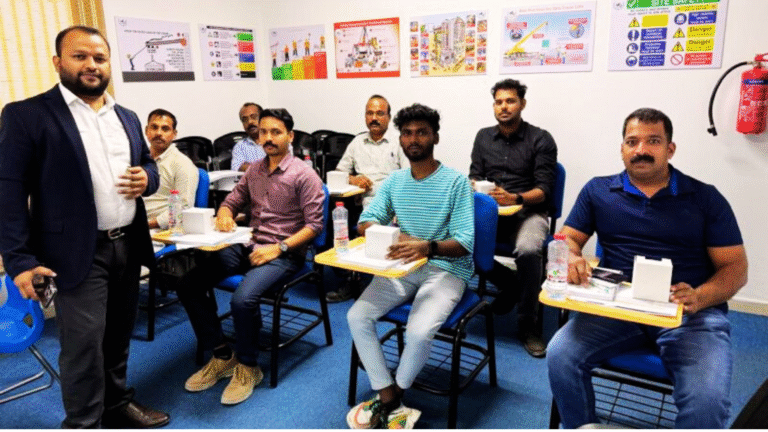
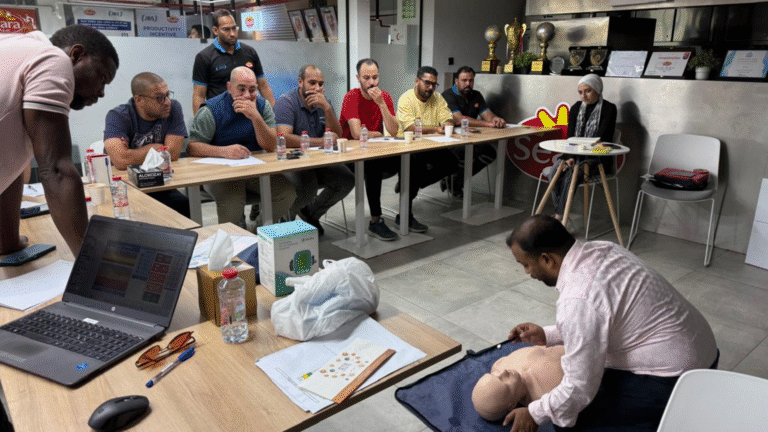
Safety and HSE Training at M2Y Global Academy
M2Y Global Academy provides professional safety and HSE training options for learners who want to develop their knowledge and qualifications in the safety field.
Students should choose a programme based on their educational background, career objective and eligibility rather than selecting a qualification only because it is popular.

How to Choose the Best Course After 12th
Choosing a course because your friends or relatives selected it may not be the right decision for your career.
Use the following steps to evaluate your options.
1. Identify Your Interests
Start by understanding what you actually enjoy.
Ask yourself:
- Do I enjoy technology?
- Do I like healthcare?
- Am I interested in business?
- Do I enjoy communication?
- Do I prefer practical work?
- Am I interested in safety and industrial environments?
- Do I enjoy creative work?
- Do I like solving analytical problems?
Your interests can help you narrow down the available choices.
2. Consider Your Academic Strengths
Your Class 12 subjects can affect your eligibility for certain courses.
For example, some programmes require specific subjects or minimum marks.
Before applying, check the official eligibility criteria.
3. Decide What Type of Career You Want
Think about the type of work environment you prefer.
Would you rather work:
- In an office?
- In a laboratory?
- In a hospital?
- At an industrial site?
- In a construction environment?
- In technology?
- In finance?
- In media?
- In a creative profession?
Your preferred work environment can help you identify suitable career fields.
4. Research the Career Before the Course
Do not research only the course name.
Research the career that comes after the course.
Find out:
- What jobs are available?
- Which industries hire professionals?
- What skills are required?
- Is additional certification required?
- Can you pursue higher education?
- What career progression is possible?
5. Check Eligibility
Before paying an admission fee, verify:
- Educational qualification
- Required subjects
- Minimum marks
- Entrance examination
- Age requirements where applicable
- Institution-specific requirements
Never assume that every institution has the same eligibility criteria.
6. Compare Course Duration
Course duration can influence your education budget and career planning.
Compare:
- Course duration
- Examination schedule
- Internship requirements
- Practical training
- Higher-study opportunities
Do not choose a course only because it is shorter.
A longer programme may be more appropriate for a particular career.
7. Compare the Total Cost
The advertised tuition fee may not always represent the complete cost of education.
Consider:
- Tuition fees
- Examination fees
- Study materials
- Travel
- Accommodation
- Additional certifications
- Internship or practical requirements
Create a realistic education budget before enrolling.
8. Check Recognition and Credibility
This is particularly important when choosing professional qualifications and certification-based programmes.
Check:
- Awarding organisation
- Accreditation or recognition
- Training provider credentials
- Assessment process
- Certificate issued
- Industry relevance
9. Look for Practical Exposure
Practical learning can help students understand how theoretical knowledge is applied.
Depending on the field, practical exposure can include:
- Projects
- Laboratory work
- Internships
- Case studies
- Simulations
- Industry assignments
- Practical assessments
10. Think About Long-Term Career Progression
Do not stop your research at the first job.
Think about:
Course → Entry-Level Role → Experience → Advanced Qualification → Senior Role
Ask yourself what additional qualifications or experience you may need to progress later.
Degree Course vs Professional Course vs Job-Oriented Course
Students often find it difficult to understand the difference between these pathways.
| Course Type | Main Purpose | Suitable For |
| Degree Course | Provides a broad academic and professional foundation | Students seeking undergraduate education |
| Professional Course | Provides a specialised professional pathway | Students targeting a specific profession |
| Job-Oriented Course | Focuses on practical or industry-specific skills | Students seeking focused career skills |
There is no universal winner.
The best option depends on your career objective.
For some students, a degree may be the best starting point. For others, a professional qualification or industry-focused course may be more appropriate.
Some career paths can also involve combining academic education with professional certifications.
Best Courses After 12th Based on Career Interest
Another useful way to choose your course is to start with your preferred career field.
| Career Interest | Possible Course Areas |
| Engineering | B.Tech, B.E. and engineering specialisations |
| Healthcare | Medicine, Dentistry, Pharmacy, Nursing and Allied Healthcare |
| IT and Technology | B.Tech, BCA, B.Sc Computer Science and specialised technology programmes |
| Finance and Accounting | B.Com, CA, CMA and Finance |
| Business and Management | BBA, BMS and Management |
| Law | Integrated Law programmes and LLB pathways |
| Media and Communication | Journalism, Mass Communication and Media |
| Design | Fashion, Graphic, Interior and other design programmes |
| Safety and HSE | Safety and HSE qualifications |
| Hospitality | Hotel Management and Hospitality programmes |
Starting with the career you want can make it easier to identify the right education pathway.
What Is the Best Course After 12th for the Future?
There is no course that is guaranteed to be the best for every student.
Future career opportunities can depend on:
- Industry demand
- Technical skills
- Communication skills
- Practical experience
- Professional qualifications
- Adaptability
- Continuous learning
- Career specialisation
Do not choose a course only because someone describes it as a “high salary course.”
Salary can vary according to experience, skills, employer, industry and location.
Instead, look at the complete career pathway.
For example:
Interested in technology? Explore technology and computer-related education.
Interested in healthcare? Explore medical, pharmacy, nursing or allied healthcare pathways according to your eligibility.
Interested in business? Explore commerce, finance and management pathways.
Interested in law and communication? Consider law, journalism, media or related programmes.
Interested in workplace safety? Explore safety and HSE qualifications.
The best choice is the one that matches your strengths, interests and long-term career objective.
How to Compare Courses Before Admission
Before choosing between two or more courses, create a simple comparison.
| Factor | Course A | Course B |
| Eligibility | Check | Check |
| Duration | Compare | Compare |
| Total Cost | Compare | Compare |
| Entrance Exam | Check | Check |
| Curriculum | Compare | Compare |
| Practical Training | Compare | Compare |
| Recognition | Verify | Verify |
| Career Opportunities | Research | Research |
| Higher Studies | Check | Check |
| Career Progression | Research | Research |
This simple comparison can prevent students from making a decision based only on advertising or recommendations from friends.
Common Mistakes Students Make After 12th
Choosing a Course Because Friends Choose It
Your friend’s interests and career goals may be completely different from yours.
Choose based on your own strengths and objectives.
Choosing Only Based on Salary
A high advertised salary does not guarantee that every graduate will receive the same salary.
Career outcomes depend on many factors.
Ignoring Eligibility
Always check the official eligibility requirements before applying.
Choosing Without Researching the Institution
The same course may be offered by institutions with different levels of training, support and recognition.
Research the institution before paying fees.
Looking Only at the Course Name
A course title does not tell you everything.
Read the curriculum and understand what you will actually learn.
Ignoring Practical Training
Where practical skills are important, find out whether the programme includes projects, practical assessments, internships, simulations or other hands-on learning.
Frequently Asked Questions About Courses After 12th
There is no single best course for everyone. The right course depends on your stream, interests, academic strengths, career goals, eligibility, budget and preferred industry.
Science students can consider engineering, medicine, computer applications, basic sciences, healthcare, biotechnology, architecture and other fields depending on whether they studied PCM, PCB or PCMB.
Popular options include B.Com, BBA, Economics, Finance, Banking, CA, CS and CMA. The right choice depends on your interest in accounting, finance, business, management or another career field.
Arts students can consider BA, Psychology, Law, Journalism and Mass Communication, Design, Hotel Management, Social Sciences and other programmes depending on their interests and eligibility.
Job-oriented options vary according to career interest. Students can explore IT, digital marketing, accounting, healthcare, technical training, safety and HSE and other industry-focused programmes.
Yes. Several professional pathways are available after Class 12. However, eligibility and admission requirements vary depending on the profession and awarding organisation.
Some safety and HSE programmes accept students after 12th, while others may have additional educational or experience requirements. Always check the specific eligibility criteria before enrolling.
Not necessarily. A degree provides a broad academic foundation, while a job-oriented course can provide specialised skills for a particular industry. The better option depends on your career objective.
There is no guaranteed high-paying course. Career earnings depend on qualifications, skills, experience, industry, employer and location. Choose a course based on your abilities and long-term career goals rather than salary claims alone.
Final Thoughts
Choosing the best course after 12th in India is not about finding one course that every student should study.
It is about finding the right combination of:
Interest + Eligibility + Skills + Career Goal + Industry Opportunity
Science students can explore engineering, medicine, technology and science-related careers. Commerce students can build careers in accounting, finance, banking, business and management. Arts and Humanities students can pursue law, media, psychology, design, social sciences and many other fields.
Students who want a more focused career can also consider professional and job-oriented courses, including safety and HSE training.
Before making your final decision, compare the course curriculum, eligibility, entrance requirements, recognition, cost, duration, practical exposure and career progression.
Most importantly, do not choose a course simply because it is popular. Choose a path that matches your abilities and interests and that you can realistically commit to developing over the long term.
Looking for a Career in Safety and HSE?
If you are interested in workplace safety, occupational health and safety or HSE, explore the safety and HSE training options available at M2Y Global Academy and choose a programme that matches your educational background and career goals.